




July 06, 2026
How Long Can a Cat Go Without Water: The Vet-Backed Hour-by-Hour Timeline

The quick answer: one day is usually survivable, two days is risky, and three days is frequently fatal. Those limits apply to a healthy adult cat in a cool home, and each one gets shorter with age, illness or hot weather.
Count from the most recent drink you actually saw, not from the last time the bowl seemed full. Evaporation and a second cat can both make the water level misleading.
Dehydration sets in quickly.
Below is an hour-by-hour breakdown of what dehydration does to a cat.
After that come five checks you can do at home and the triage approach vets rely on every day.
The Hour-by-Hour Effects of Going Without Water
Cats evolved from desert-dwelling ancestors. As a result, their kidneys concentrate urine more strongly than ours, reclaiming fluid from waste, so cats need less water than most pets. That biology gives you some breathing room.
It will not give you four days, though.
0-12 Hours
During the first half day, there is little to notice. The kidneys step up their effort, producing the highly concentrated urine described by VCA Animal Hospitals.
Beneath the surface, blood pressure holds steady. Your cat remains alert, and the bowl goes untouched even as drinking clearly falls off.
13-24 Hours
Somewhere between 13 and 24 hours, the gums begin to feel a little sticky rather than slippery. If you pinch the skin at the back of the neck, it still springs back quickly.
An observant owner will notice lower water intake and slightly less springy skin around the mouth. Hydration is already dropping.
25-48 Hours
From 24 to 48 hours, dehydration becomes clinical. Eyes look sunken, lethargy becomes obvious and less urine is produced. The kidneys are now measurably stressed.
The Cornell Feline Health Center considers this a stage that warrants a vet call the same day.
49-72 Hours
Between 48 and 72 hours, the situation turns dangerous, with electrolyte disturbances and a rising heart rate.
If your cat starts vomiting at this point, a gradual shortfall becomes a rapid one, because fluid is now being lost on two fronts. This is also where rehydrating at home is no longer realistic.
Over 72 Hours
Beyond 72 hours, a cat's life is in real danger. Sunken eyes, weakness and ongoing lethargy indicate organ damage is already happening, and the cat needs an emergency vet immediately.
Shorten this entire timeline for kittens, seniors, and cats with kidney disease, diabetes or hyperthyroidism. They have much smaller reserves, so anything that would normally mean calling tomorrow means calling today.
A cat with vomiting or diarrhea can become clinically dehydrated in as little as 12 hours. Those windows narrow even further when there is no running water and the only option is a stale bowl.
The key lesson from this timeline is that every additional hour without water costs more than the hour before.
Each number above is an upper limit for a healthy cat, not a goal for yours. If your cat is old, sick or very young, use the triage tiers below instead.
A Stainless Steel Fountain as Everyday Prevention
Everything above is emergency triage. What keeps you from ever needing it is far less dramatic: water your cat drinks without coaxing, available at 4am just as easily as at dinnertime.
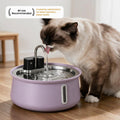
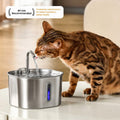
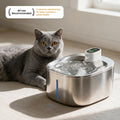
The Wireless Cat Fountain 2.0 tackles the usual reasons cats under-drink in a single device.
Fill it, clean it on a regular schedule, and water stays on offer whether or not anyone is around to notice an empty bowl.
Stainless steel and activated carbon filtration help keep the water tasting fresh. Plastic bowls deter some cats for another reason: they scratch, and scratched surfaces hold onto smells and film in a way steel does not.
Healthy water intake supports cats with kidney disease and is a standard recommendation for cats prone to lower urinary tract problems. It does not restore kidney function and it is not a treatment, but it removes one source of stress from a body already under strain.
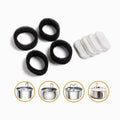
Its water-contact parts are 304 food-grade stainless steel, the steel parts are dishwasher-safe, and the pump runs under 25 dB.
See the Wireless Cat Fountain 2.0 here.
Spotting Dehydration in 30 Seconds: Skin, Gums and More
You can catch a dehydrated cat early without a vet. The warning signs come down to five fast checks, all done in under a minute.
If two checks come back abnormal, your cat has lost a moderate amount of fluid.
- Skin tent. Gently lift the loose skin between the shoulder blades and release it. If it takes 1 to 2 seconds to settle, that suggests moderate dehydration.
- Gums. Press a fingertip against the gum above an upper canine tooth for one second. Healthy gums are pink, moist and slippery, and color returns within two seconds. Sticky or dry gums suggest dehydration; color taking longer than two seconds to return points to a circulation problem, not just dehydration, and is the more concerning finding.
- Eyes. Look from above and from the side. Eyes that appear hollow or sunk deep into the sockets indicate moderate fluid loss.
- Paws and ear tips. Feel the paw pads and the edges of the ears. In a sick cat, cold paws and ears are a late warning sign, not an early one, and suggest circulation is failing. A cat with cold extremities plus any other finding above needs an emergency vet right away.
- Posture and behavior. Watch for a hunched stance or slow blinking. Reluctance to jump fits the same pattern, as does a wobbly walk or sleeping somewhere unusual.
Two abnormal findings mean your cat has reached moderate dehydration.
Here is what your vet would want you to do next.
Monitor, Phone the Vet, or Head to the ER
Understanding the timeline is only part of the picture; knowing how to respond at each point is the rest. The three levels below mirror how most clinics triage a dehydrated cat by phone, and your cat fits into one of them right now.
Level one: monitor at home.
Your cat is alert and eating, its mouth is pink and moist, and pinched skin snaps back in under a second. Offer wet food or low-sodium broth, along with fresh water placed away from the food bowl.
A cat that is eating, responsive and drank at some point yesterday belongs here. Keep offering moisture-rich food and keep an eye on things.
Level two: call your vet today.
Your cat is quieter than normal, its gums feel a bit tacky instead of slick, and pinched skin needs a second or two to flatten.
Going 24 to 48 hours without drinking also places a cat at this level.
Phone your regular clinic and ask for a same-day appointment. Subcutaneous fluids are often part of treatment, but your vet will also want to find out why your cat stopped drinking, so expect blood tests or a urine sample too.
Level three: go to the emergency vet.
This applies if your cat has collapsed or can't stand, or if the gums are dry or pale and the skin tent lasts longer than 2 seconds.
Repeated vomiting also puts a cat here, as does going 48 hours or longer without water. Any of these signs in a kitten or a senior cat means heading straight to the emergency clinic without calling first.
Standard care at this level includes IV fluids, bloodwork and an overnight stay.
There is one rule that overrides these levels: an existing illness cuts the thresholds in half. A cat already diagnosed with CKD, or a senior cat showing level-two signs, should be treated as an emergency.
These cats deteriorate quickly, usually because of their kidneys, which is why a same-day appointment is often not soon enough.
Why Cats Stop Drinking, and How to Get Them Started Again
Next are the six most common reasons cats stop drinking. You can address five of them yourself this afternoon.
Most have a fix you can try right away.
- Dirty bowl or old water. Wash the bowl twice a day and refill it with fresh water each time.
- Poor placement. Put water a few feet away from food and far from the litter box.
- Uncomfortable shape. Some cats refuse to put their face into a deep, narrow container. A wide, shallow bowl or a fountain with an open basin solves that.
- Diet. A cat eating only kibble must get all of its daily water from the bowl, whereas a cat on canned food starts with most of its needs met, and adding one wet meal a day closes much of that gap.
- Stress or upheaval. After illness, a stressful event or a move, set out water in several places. Slightly warm water in clean bowls has a stronger smell that can attract your cat.
- Underlying illness. Dental pain and nausea reduce drinking, while kidney disease, diabetes and hyperthyroidism usually increase it. Either change deserves a vet visit, and the direction of the change helps your vet narrow down the cause.
The commonly cited target is roughly 50 ml per kg of body weight every 24 hours, including moisture from food.
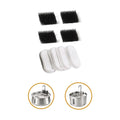
Strongly chlorinated tap water turns some cats off completely, and they drink normally once it is filtered. Activated carbon filtration takes that factor out of the equation, and replacement filters keep it working.
A fountain like the Wireless Cat Fountain 2.0 addresses several of those triggers at once with fresh water, moving water and a wide, whisker-friendly basin.
For older cats, the goal is fewer dry stretches rather than a larger daily total. Drinking spread throughout the day keeps urine dilute, and that is what is linked to fewer flare-ups.
That is the complete hour-by-hour picture of how long a cat can go without water. Figure out what keeps your cat drinking; for many cats, a fountain is the easiest solution.